Pharma Keeps Buying Better Models. Clinical Conversion Needs a Mature Decision Ontology

Ranjan Kumar

November 15, 2026
AI has made drug discovery faster. It hasn’t changed the odds where programs actually die. Here’s where I think the missing piece is.
TL;DR
Part 1 · The Problem
AI has improved the easy problems. The hard one, whether a target works in patients, hasn’t moved.
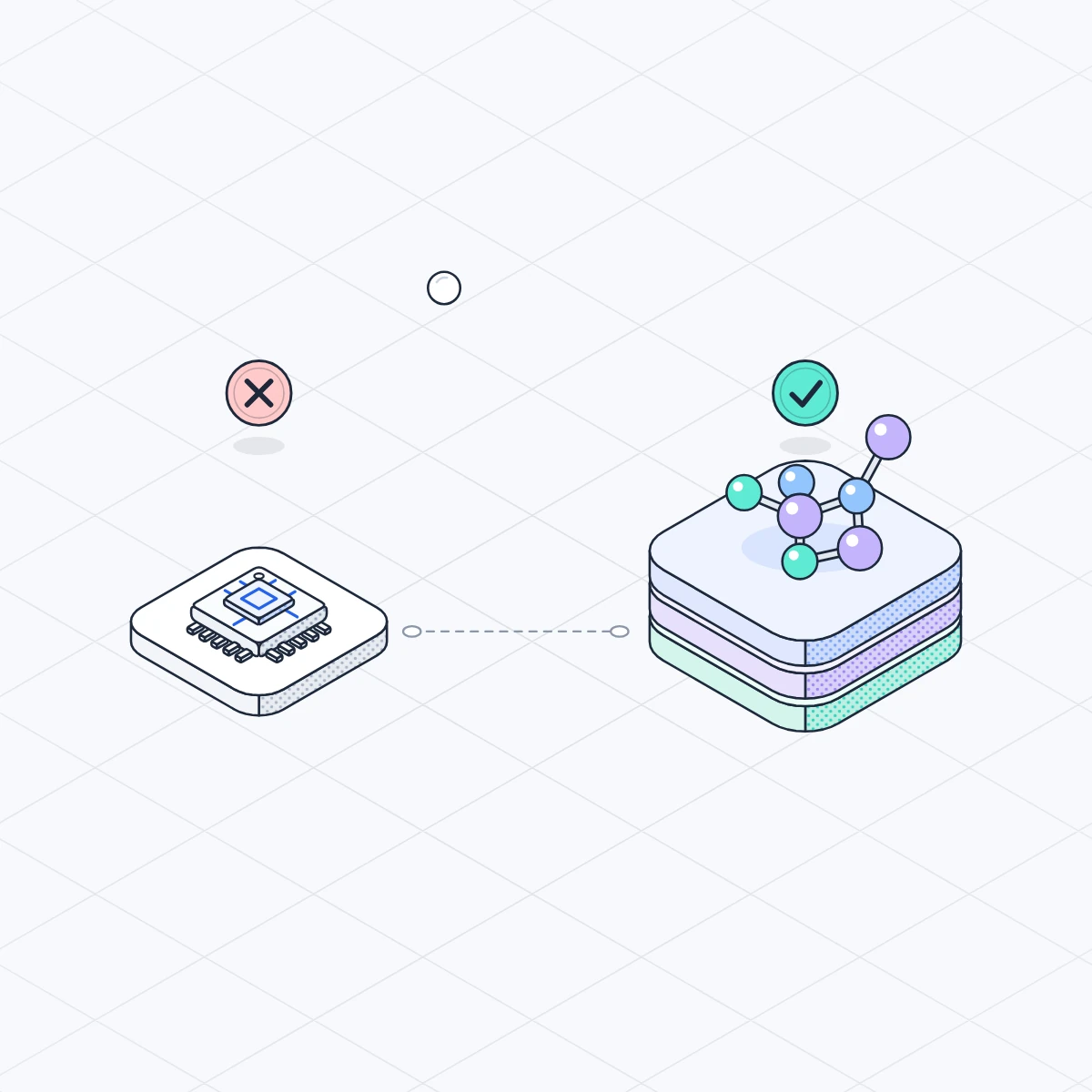
AI-discovered molecules now clear Phase I 80 to 90% of the time, against 40 to 65% historically. In Phase II, the same molecules succeed about 40% of the time, which is the industry norm.
Faster early, flat late.
The pattern holds elsewhere. IQVIA found AI-enabled programs at emerging biopharma reached 75% Phase I success, while Phase II matched non-AI peers. McKinsey reports that despite rising investment, timelines and success rates have yet to improve substantially. Rentosertib entered Phase III in July 2026, but no AI-discovered novel molecule has major-regulator approval yet.
Why this matters: Fast early phases and flat late-phase odds point away from model capacity. They point at what the model reasons over: which things exist, what they mean for the decision at hand, and what happened the last time a similar call was made.
That is an ontology.
The calls that set Phase II odds are made well before it: which target, which compound, go or no-go before IND. The knowledge for those calls already sits inside the company, in ELNs, compound registries, assays, LIMS and study reports. It’s just not structured for decisions.
Part 2 · The Diagnosis
Takeaway: Pharma’s ontologies describe data. Decisions need meaning and memory, and those live two layers up.
Compound registries, assay catalogues and controlled vocabularies are all ontologies. But they all describe data. A decision needs two more things: what the evidence means for this specific use case, and what happened the last time a similar call was made.
Small per-query gaps become the whole decision.
Here’s what each layer needs before it counts as mature:
Matures fast
Data ontology
each concept resolves to one identifier, and every edge has provenance. Matures fast, through normalization.
Medium pace
Domain ontology
scientists govern it, and it holds across projects. Matures at medium pace, through governed curation.
Slowest
Decision ontology
its calibration beats unaided committee judgment. Matures slowest, through outcomes written back.
Most programs build up to level 5 because it’s the most tractable. That work is valuable. It’s what AstraZeneca’s FAIR program and Novartis’s data governance work are made of. But warehouse-native semantic layers top out there.
The accuracy gap is bigger than it looks
In our deployment data, contextual accuracy at workflow level is 38% on a warehouse-native data ontology and 88% with all three layers.
Why so large? A workflow, like a series-progression review, contains several business questions, and each resolves into several child queries. Errors anywhere below compound upward. Across 19 independent queries, 95% per-query accuracy compounds to about 38%, while 99.3% compounds to about 88%.
Most real questions are causal
71% of the enterprise use cases we see are causal questions a data ontology can’t answer. Every month one of these waits on a manual build is value lost. Think of a target prioritisation or optimisation of
71% of Use Cases Are Causal Asks.
| Use Case Type | Example Questions | Share |
|---|---|---|
| Causal (Why / What will happen) |
| 71% |
| Non-causal (Descriptive / Predictive) |
| 29% |
Part 3 · The Evidence
Takeaway: Graphs win where biology is already de-risked. The only success-rate gain on record came from a decision structure.
Read layer by layer, the record has a clear shape
| Program | Layer doing the work | Result | What it teaches |
|---|---|---|---|
| BenevolentAI: baricitinib for COVID-19 (2020) | Domain. Mechanism-level objects, queried by experts through a visual pattern builder [4] | 38% mortality reduction in Lilly's COV-BARRIER by the company's account; full FDA approval May 2022 [5, 6] | The field's one clear approval tied to a knowledge graph is a repurposed, approved drug with known safety |
| BenevolentAI: BEN-2293, Trk inhibitor for atopic dermatitis | Data and domain, aimed at novel-target efficacy | Phase 2a in 91 adults was safe and no better than placebo; up to 180 jobs cut; delisted March 2025 [7, 8, 9] | Graphs are weakest where the question is whether a new target works in patients |
| Insilico: rentosertib (TNIK, IPF) | Data plus causal inference across multi-omics, networks, literature and patents [10] | About 18 months from target to preclinical candidate; Phase III began July 2026 [11, 12] | A real result on a novel target. One asset, verdict years away. |
| Healx: NF1 candidate | Data. A rare-disease knowledge graph [13] | Open-label, single-arm Phase 2; primary completion estimated mid-2027 [14] | Promising, untested at scale |
| Every Cure: MATRIX | Data at scale. About 60M drug–disease pairs scored under a $48.3M ARPA-H contract [15, 16] | One graph from 3 graphs, 95 sources and 81M edges [22] | Even the best data layer needed physician curation to become actionable (Section 4) |
| AstraZeneca: 5R framework | Decision. Five determinants drawn from a review of 2005–2010 outcomes [25] | Candidate-to-Phase III success rose from 4% (2005–2010) to 19% (2012–2016), company-reported [26] | The one success-rate gain on record came from a hand-built decision structure |
| Sanofi: Plai | Decision. Cost, enrolment and probability-of-success forecasts with what-if scenarios [29] | Development committees open with an AI agent's view on whether a program should advance [30] | The nearest public decision layer in production. No outcome data yet. |
Enterprise data layers report real gains in speed. AstraZeneca's Scientific Intelligence tool turned week-long queries into minutes by its vendor's account [17], and Causaly lists 12 of the top 20 pharma companies as customers [19]. Almost all of it is company- or vendor-reported, and none reports a prospective effect on Phase 2 success. MIT NANDA's cross-industry finding, that purchased AI succeeds about 67% of the time against one-third for internal builds, is self-reported, and its authors caution against reading it causally [20, 21].
Where graphs succeed. BenevolentAI’s baricitinib is the field’s one clear approval tied to a knowledge graph. But it was a repurposed, approved drug with known safety.
Where graphs struggle. BEN-2293 was safe in Phase 2a but no better than placebo. Graphs are weakest where the question is whether a new target works in patients.
Where the jury is out. Insilico’s rentosertib is a real result on a novel target, with about 18 months from target to preclinical candidate. It’s one asset, and the verdict is years away.
Where success rates actually moved. AstraZeneca’s 5R framework raised candidate-to-Phase III success from 4% to 19%, by the company’s own report. It used no bigger model or dataset, just a hand-built decision structure derived from past outcomes and refined over years.
Why a data ontology falls short
Every Cure’s own account shows the line clearly:
Identifiers fix what something is. Decisions depend on what it means for the question.
The second set of calls is about what counts as a disease or a drug for the question being asked. No identifier scheme makes those calls.
The model side points the same way.
Link prediction collapses where data runs out.
Models scored well by leaning on how connected an entity was, then collapsed on sparse ones. A data ontology can’t tell which relations carry decision-relevant meaning, so it can’t stop the model learning that shortcut.
Part 4 · The Solution
Model the decision itself, then let outcomes teach it.
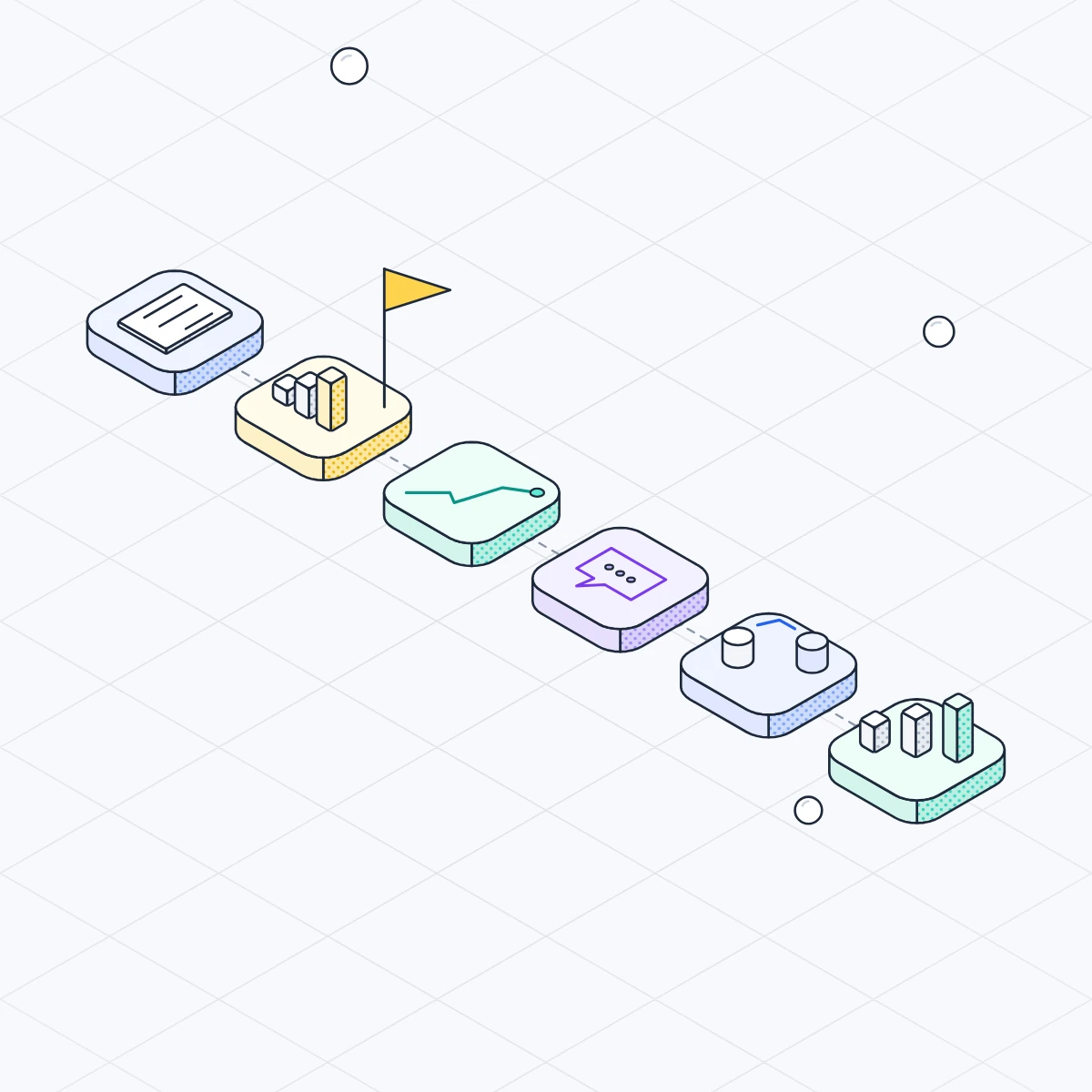
The decision chain.
Evidence
Readouts, findings, genetics, with provenance
Assumption
What the team believed, with confidence
Call
Advance, hold, drop; dose; go/no-go
Outcome
What happened, at every observable stage
Update
Written back so the system learns
Scannell and Bosley modelled discovery as a series of decisions. Their finding works almost as this layer’s job description:
A 0.1 shift in how well a screening model predicts clinical outcome can offset a 10-fold, even 100-fold, change in throughput.
The honest problem: Phase II outcomes arrive years later and in small numbers. A layer that waits for them learns too slowly to matter. It has to learn from intermediate evidence too, such as assay-to-outcome concordance, matched-pair results, and whether a flagged liability turned out to be real. Ask any vendor claiming a self-learning causal chain to demonstrate this first, including us.
Learning needs a gate
A learning ontology drifts unless every update passes the same controls as a definition change.
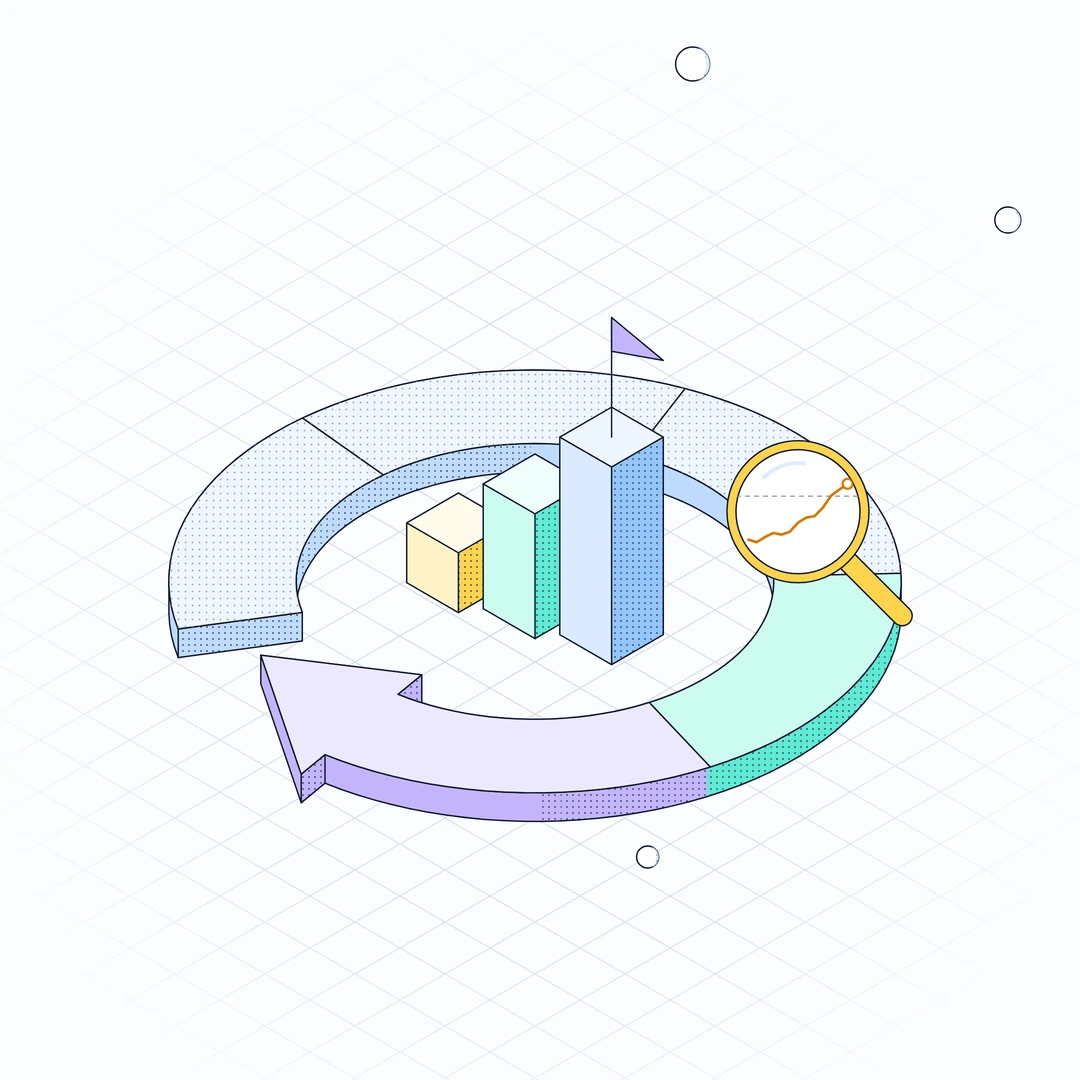
The governed update.
1. Capture
The signal, with full trace
2. Propose
As a readable diff
3. Replay
Approved questions to catch regressions
4. Approve
Via the named owner
5. Commit
As a new version, rollback kept
Maturity is measurable
Five tests. Most enterprises pass four. The fifth is the one that counts
Regulators are heading the same way. The FDA and EMA’s January 2026 guiding principles on AI in drug development call for documentation that lets reviewers evaluate model behaviour independently. Provenance and versioning are moving from best practice to filing hygiene.
Five tests of ontology maturity.
Building is no longer the bottleneck
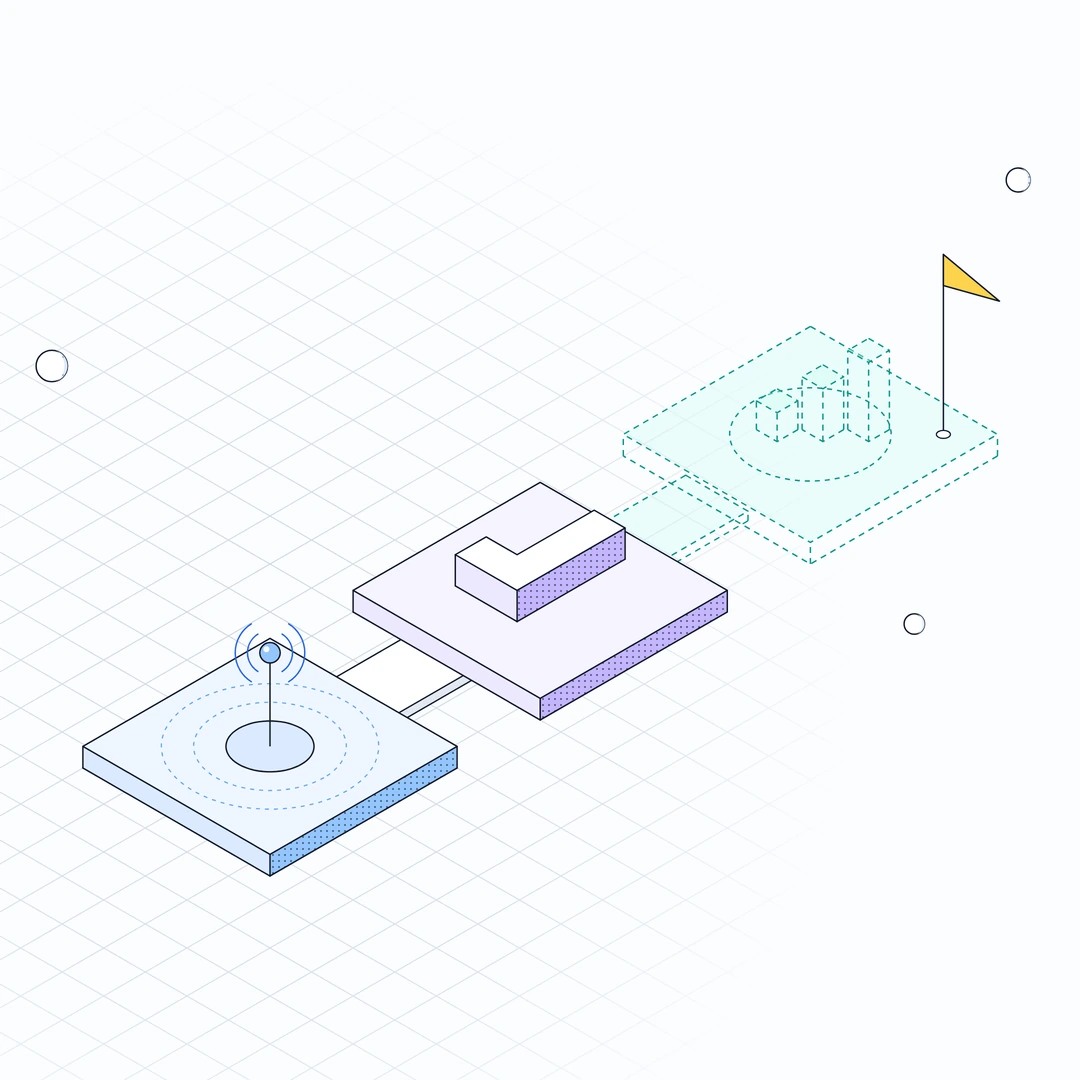
18 months vs 45 days.
Hand-built warehouse
Data ontology only
Autonomous build
Data + domain + decision layers
Autonomous extraction from structured and unstructured sources, plus pharma domain templates, now gets a working three-layer ontology live in about 45 days. A hand-built data ontology alone typically takes 18+ months.
Fast build and slow maturity are compatible. What the 45 days buy is an earlier start on the learning clock.
Part 5 · The Bet, and How to Test It
Models are licensable. Your decision history is yours alone.
Chai is licensed to Pfizer. Isomorphic Labs raised $2.1B and partners with Novartis, Lilly and J&J. Your competitors can buy the same model layer you can.
Capital spent on models buys parity. Capital spent maturing the decision layer compounds.
A corollary for CDOs: if decision history is the asset, it has to live in your own estate, in versioned files any tool can read.
What to transfer, and what it takes to keep it running.
| Layer | What should transfer | Upkeep after a switch |
|---|---|---|
| Data | Metric definitions, relationships, joins | Low |
| Domain | Business objects and rules | Medium : new relationships need team approval |
| Decision | Causal chains and weights, as of transfer | High : needs a learning harness and compute |
Portable files are the baseline. The harness that keeps the decision layer current is the true cost of ownership.
How you’d know I’m wrong
A thesis worth funding should be falsifiable.
Four tests that would disprove this.
| Test | What to measure | The thesis is wrong if... |
|---|---|---|
| Calibration | Recorded advance/hold calls vs Phase II progression | They don't beat committee judgment after a few years |
| Predictive validity | How well each assay tracked later outcomes | Teams can't produce the number, or it stops improving |
| Maturity score | The five tests, with #5 evidenced by outcomes | The score stays flat release over release |
| Time to evidence | Question → provenance-backed answer; re-checking hours | Neither fails |
No one has published the calibration test yet. It’s the one that settles the argument.
The Bottom Line
The data ontology tells you what exists. The domain ontology tells you what it means for this use case. The decision ontology tells you what you decided, why, and what happened.
The last one is the slowest to mature and the one that matters most for success rate.
Ontology has yet to be proven to lift Phase II success. But five observations point the same way:
When you evaluate a vendor or an internal program, ask for evidence of maturity measured at workflow level, starting with the fifth test.
A question worth sitting with
Where does your organisation’s ontology stop today, at data, domain, or decision?
Tell me in the comments or read us on www.decisionx.ai
Sources
AI-discovered molecules now clear Phase I 80 to 90% of the time, against 40 to 65% historically, but in Phase II they succeed about 40% of the time, which is the industry norm. Fast early phases and flat late-phase odds point away from model capacity. They point at what the model reasons over: which things exist, what they mean for the decision at hand, and what happened the last time a similar call was made. That is an ontology.
The data ontology tells you what exists: each concept resolves to one identifier, and every edge has provenance. The domain ontology tells you what it means for this use case: scientists govern it, and it holds across projects. The decision ontology tells you what you decided, why, and what happened, and it is mature when its calibration beats unaided committee judgment. In DecisionX deployment data, workflow-level accuracy is 38% on a warehouse-native data ontology and 88% with all three layers.
The article sets out four tests. Calibration compares recorded advance and hold calls against Phase II progression, and the thesis is wrong if they don't beat committee judgment after a few years. Predictive validity asks how well each assay tracked later outcomes. The maturity score tracks the five maturity tests, with outcome validation evidenced by outcomes, release over release. Time to evidence measures question to provenance-backed answer and re-checking hours. No one has published the calibration test yet, and it is the one that settles the argument.

Ranjan Kumar is the Founder and CEO of DecisionX AI, the world’s first self-learning, context-aware Decision Intelligence platform that enables enterprises to make smarter, faster business decisions through agentic AI. A serial entrepreneur and three-time founder with over 17 years of experience, Ranjan previously built Entropik, the world’s first Emotion AI platform with 17 global patent claims. An IIT Kharagpur alumnus, he is widely recognized as a thought leader in enterprise AI, Ontology Engineering, decision reasoning, and AI-driven business transformation.